📌More Than Just the Glow: A Grown-Up’s Guide to De Wallen 🏮📜
📍Amsterdam Behind the Neon: What No One Tells You About the Red Light District 🔴🇳🇱
✨Navigating the history, the "No-Go" rules, and the surprising charm of De Wallen. 🏰🕯️
The Red Light District (known locally as De Wallen) is a paradox. It is the oldest part of Amsterdam, a center of global tourism, and a living, breathing neighborhood all at once. If you’re visiting for the first time, the sensory overload of neon lights reflected in the canals is unforgettable—but there is an art to visiting this area correctly. 🏮🌊
Red Light District
- Central Station
- Beurs van Berlage
- Magna Plaza
- National Monument
- Dam Square
- Royal Palace
- The New Church
- Oude Kerk
- De Wallen
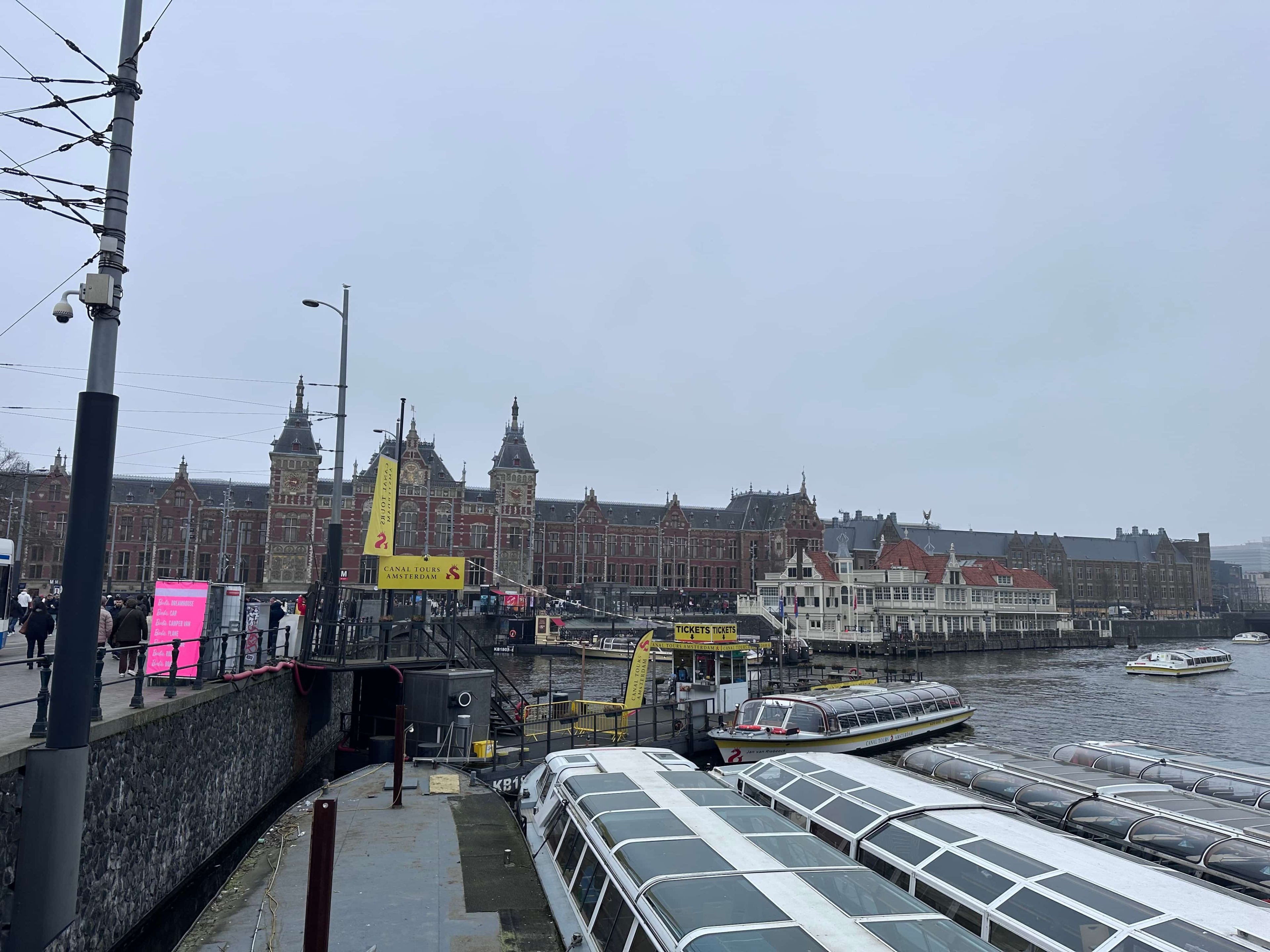
We took a tram ride from the Grand Hotel Downtown straight to Amsterdam Centraal. When we step off the tram, the first thing that hits you isn't just the bustle—it’s the sheer scale of the station overlooking the great canal. 🚆🌊 When you first see Amsterdam Centraal, it’s hard to believe it’s just a train station. It looks more like a royal palace or a cathedral. But if you look a little closer, this old building has some pretty wild secrets:
The entire station was built on three man-made islands. Because the ground in Amsterdam is basically mud, the building is held up by 8,687 wooden poles driven deep into the earth. It’s literally a massive brick palace sitting on a forest of trees! 🪵🏗️
On the front of the building, there are two big towers. One shows the time (the clock), but the other is actually a giant wind dial. Since the Dutch have always been a seafaring nation, they wanted travelers to know exactly which way the wind was blowing the moment they stepped outside. ⛵💨
Next time you’re walking past the eastern side of the station, keep an eye out for an extra-fancy, decorated door. That’s the Royal Waiting Room. It was built specifically so the King and Queen could have their own private, posh space to wait for their train. 👑🤫
1 / 5
First Stop: Beurs van Berlage & The Bronze Bull 🐂📈
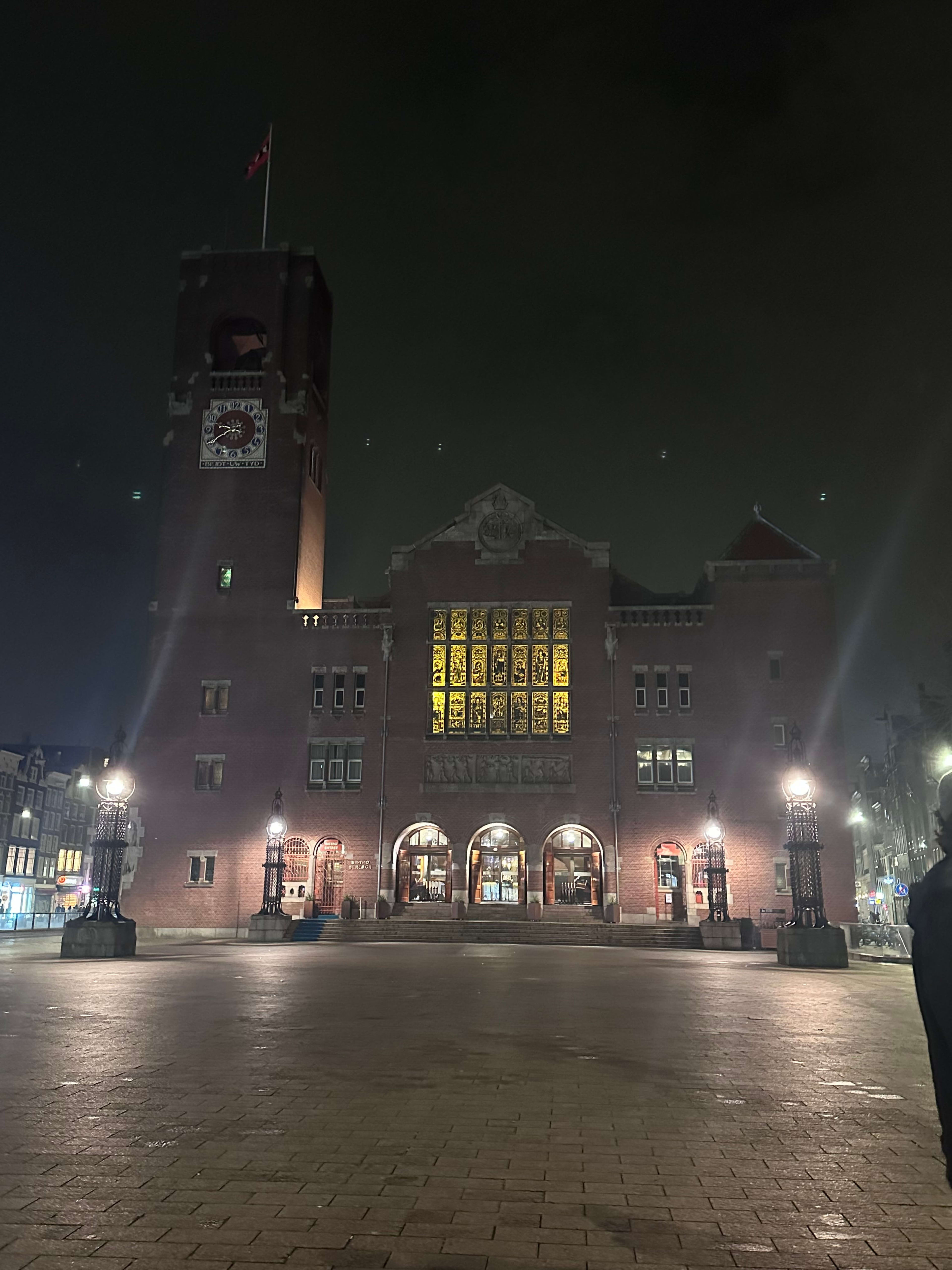
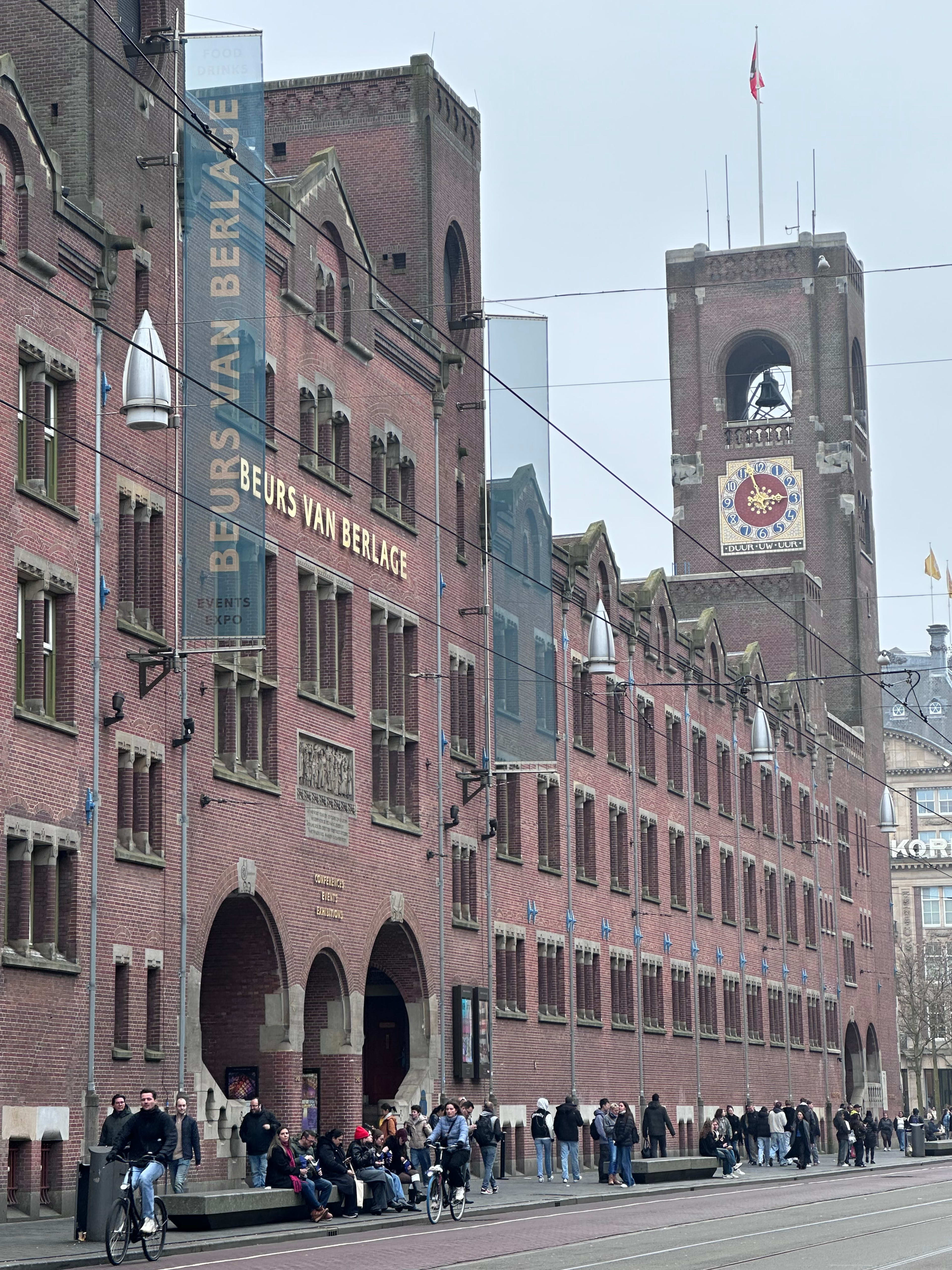
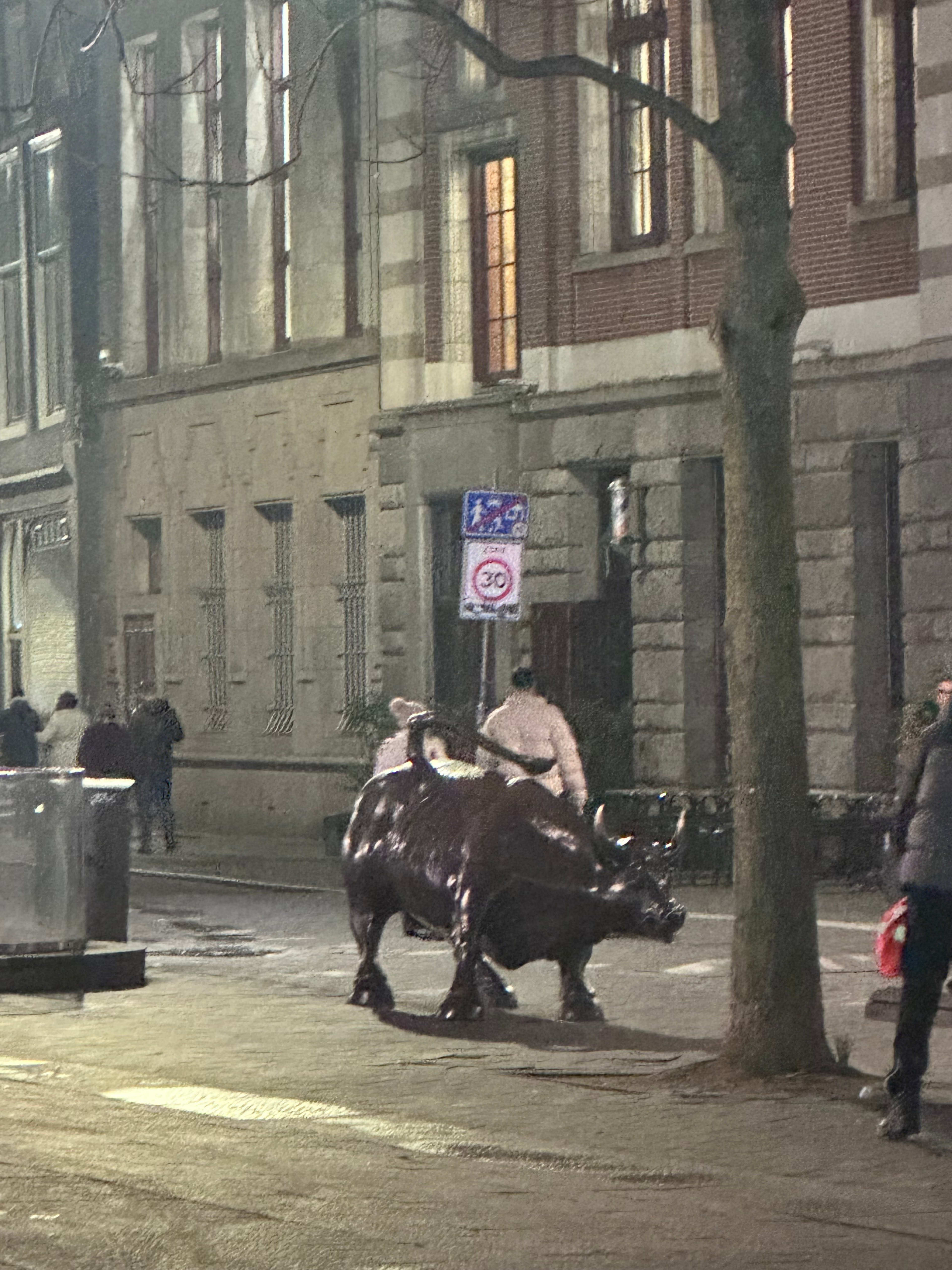
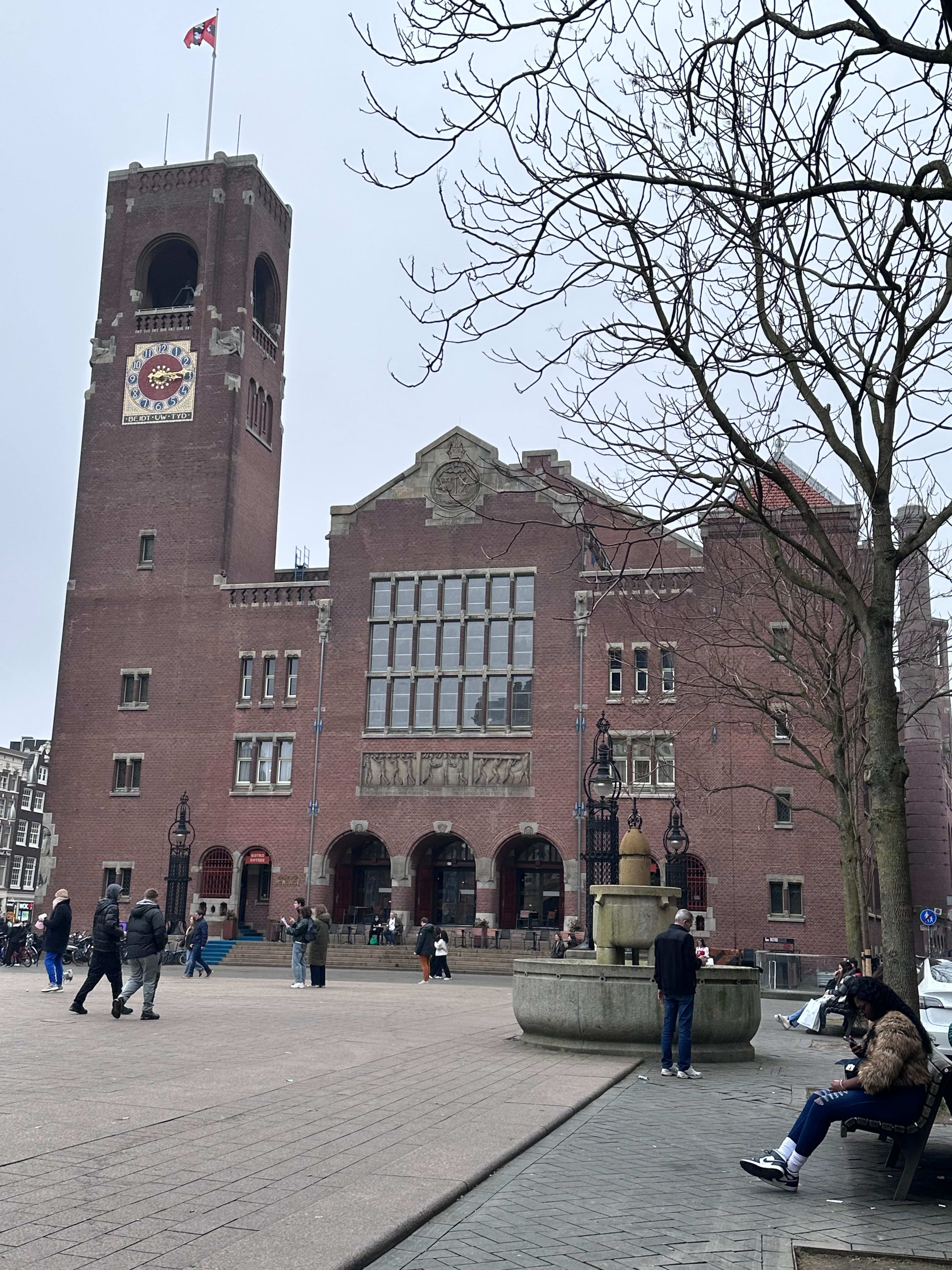
From the station, we started walking down the Damrak, the city’s main artery. Our first real stop was the Beurs van Berlage, a stunning red-brick building that was once the Amsterdam Stock Exchange. Did you know that Amsterdam is literally the birthplace of the modern stock exchange? Right out front, you can’t miss the Bronze Bull standing guard (it is actually a sister statue to the one on Wall Street. 🗽🐂) But while the New York bull represents "upward" market strength, this bull was placed here to represent the resilience of the Dutch economy. The building itself was a scandal when it was built in 1903. It was one of the first "modern" buildings in the city, and traditionalists hated it because it didn't have the classic ornate carvings. Today, it’s considered the masterpiece of Dutch architecture. 🧱🎨
Just behind Dam Square, you’ll see a building that looks far too fancy to be a shopping mall. This is the Magna Plaza, formerly the city's Main Post Office. Don't just look at the outside. Walk into the central atrium and look up. The soaring arches and the massive glass ceiling make you feel like you’re shopping in a cathedral. 🏛️🛒
Dam Square: The Living Heart of Amsterdam 🏛️🕊️
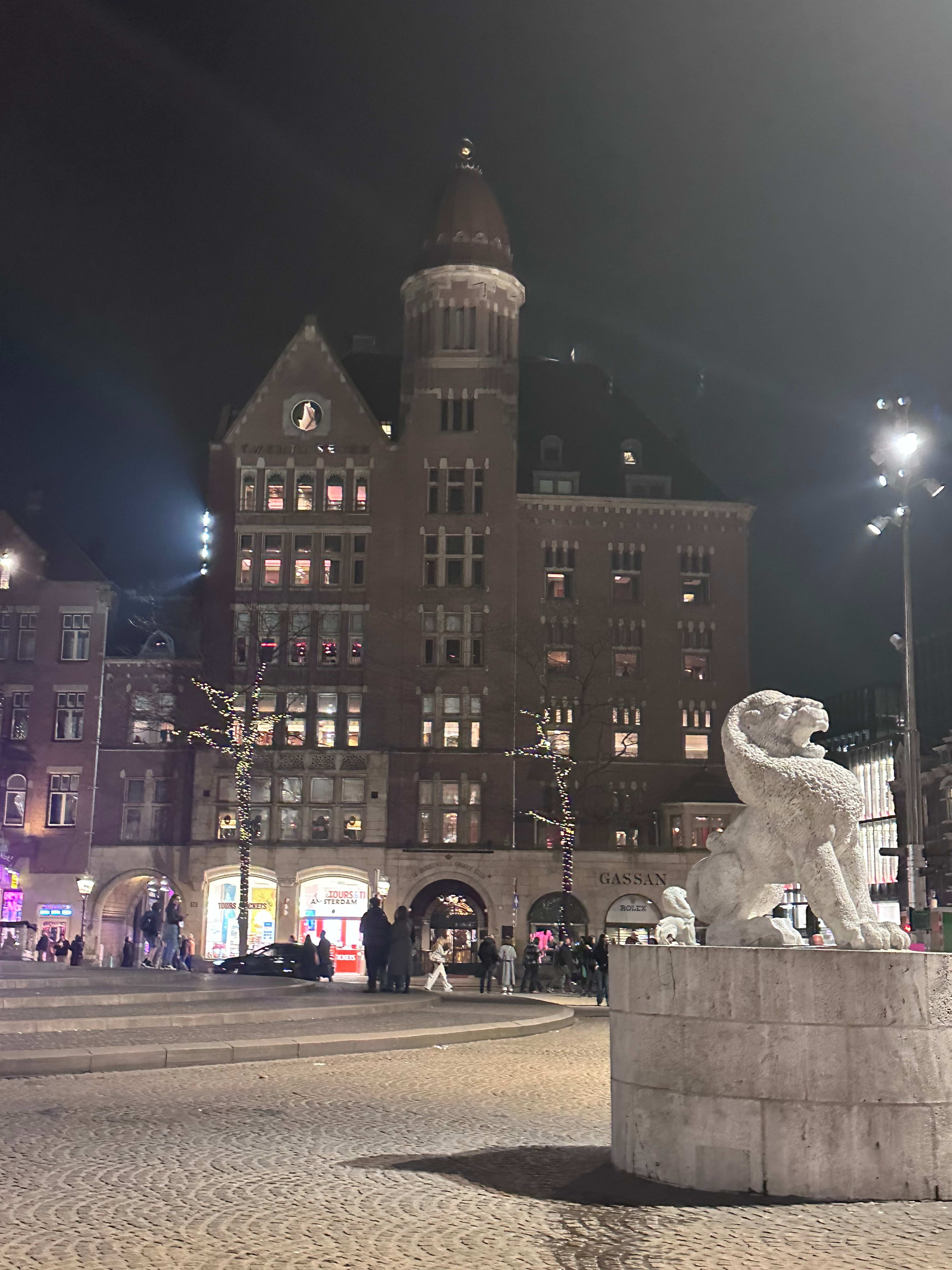
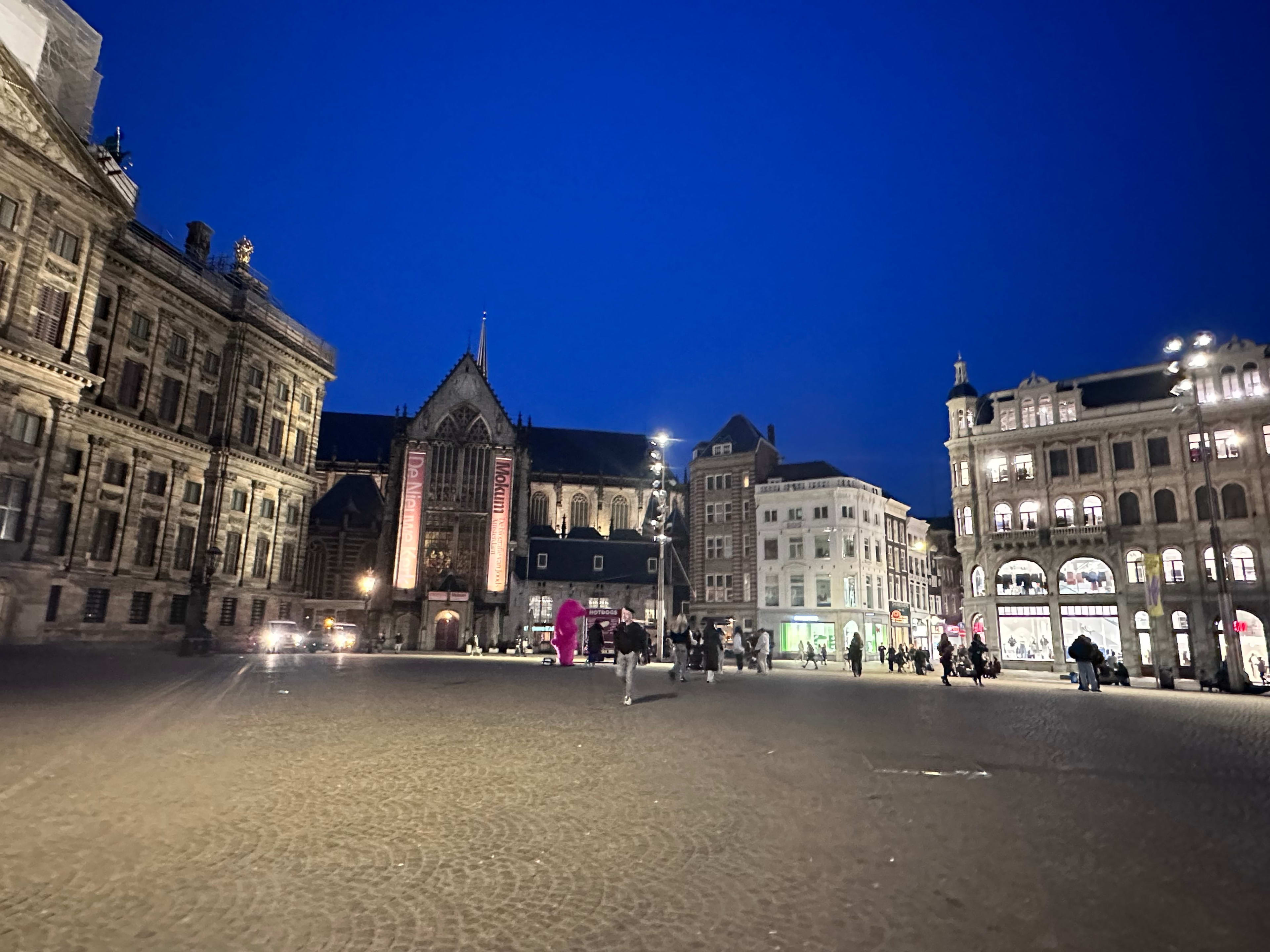
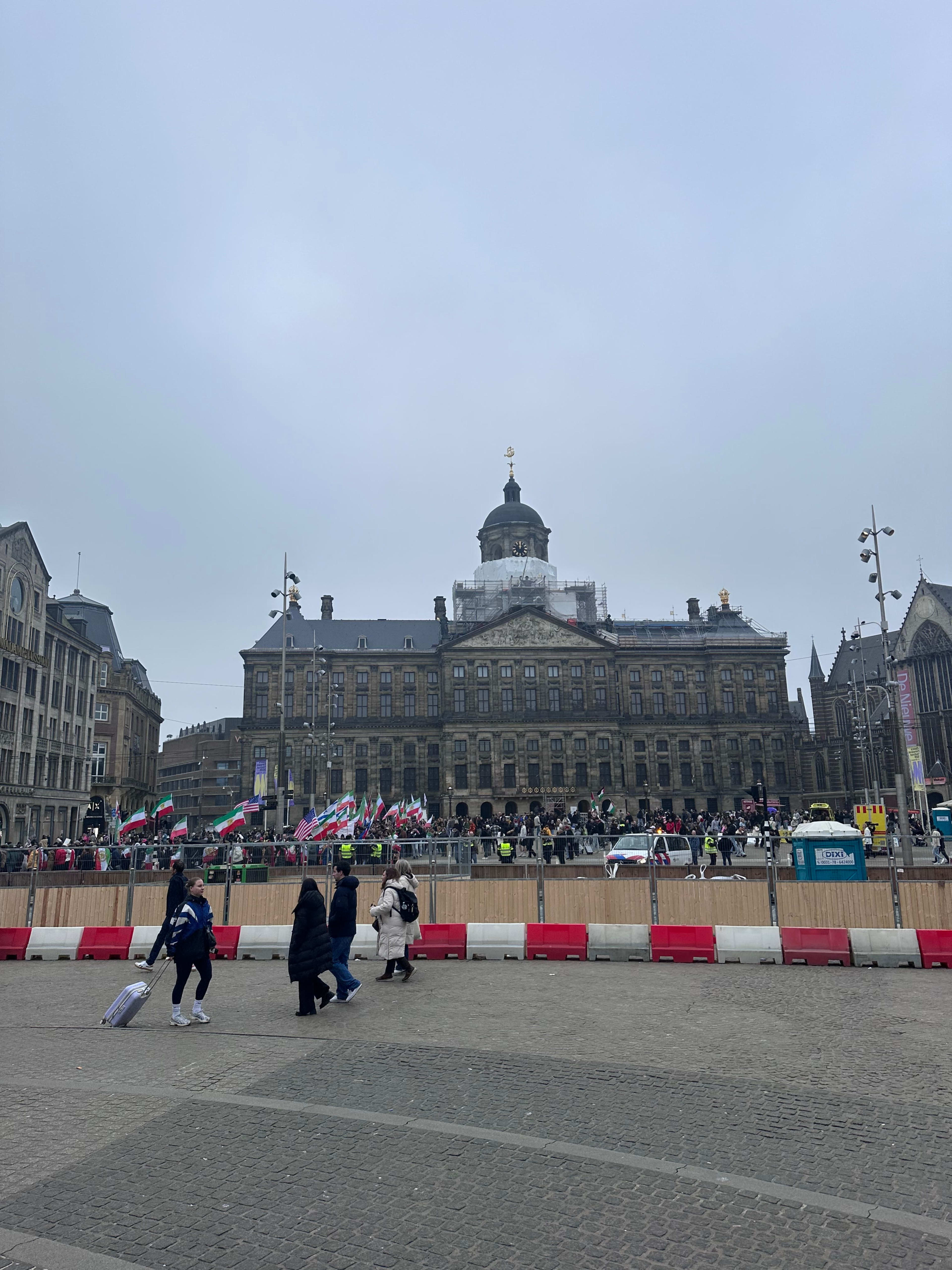
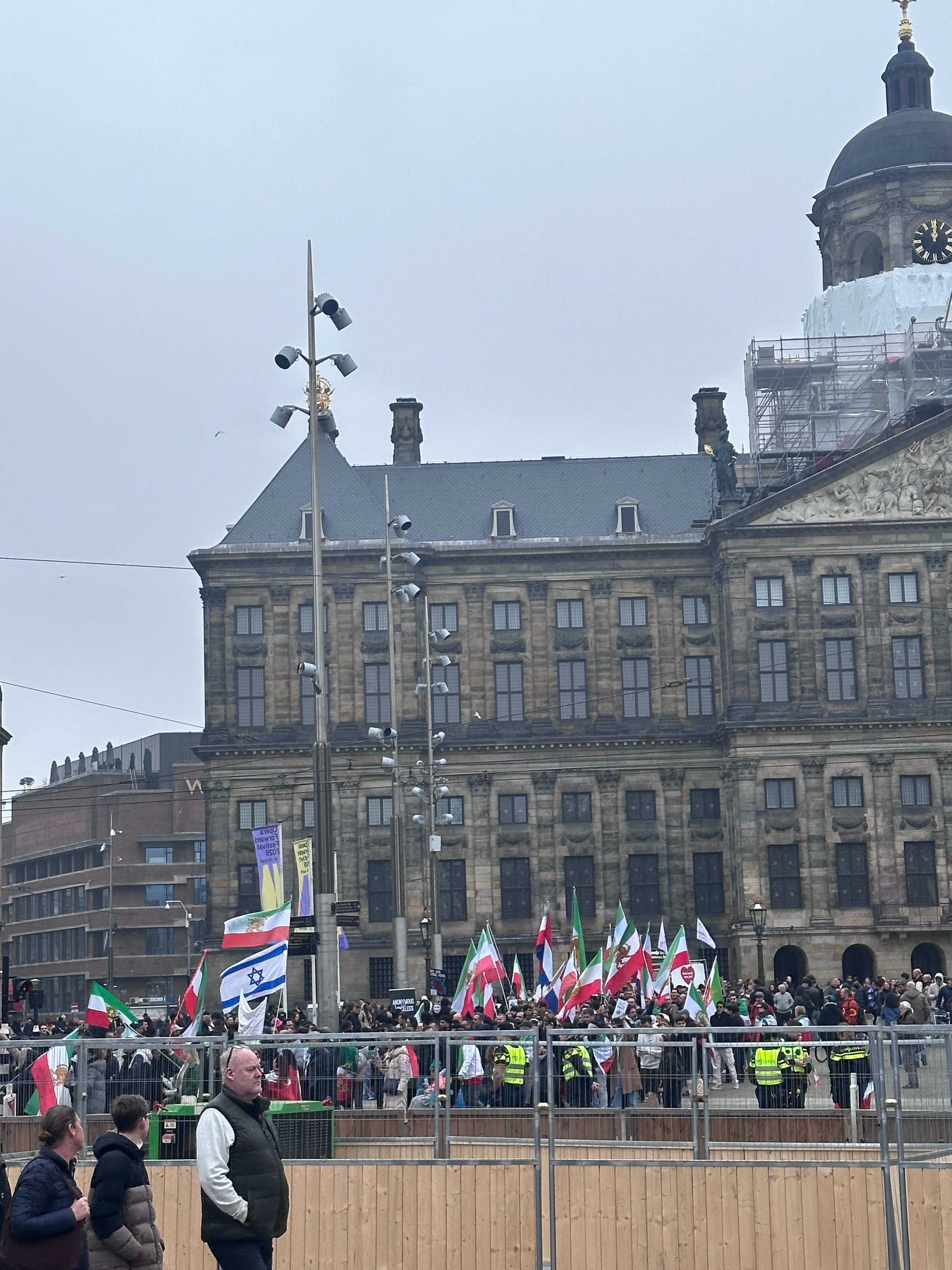
It’s where history, royalty, and thousands of pigeons all meet in one massive open space. It’s usually buzzing with energy (parades, protestors, and displays), but if you look past the street performers, there’s a lot of "hidden" history right under your boots.
The National Monument: A Pillar of Stories 🤍🧱
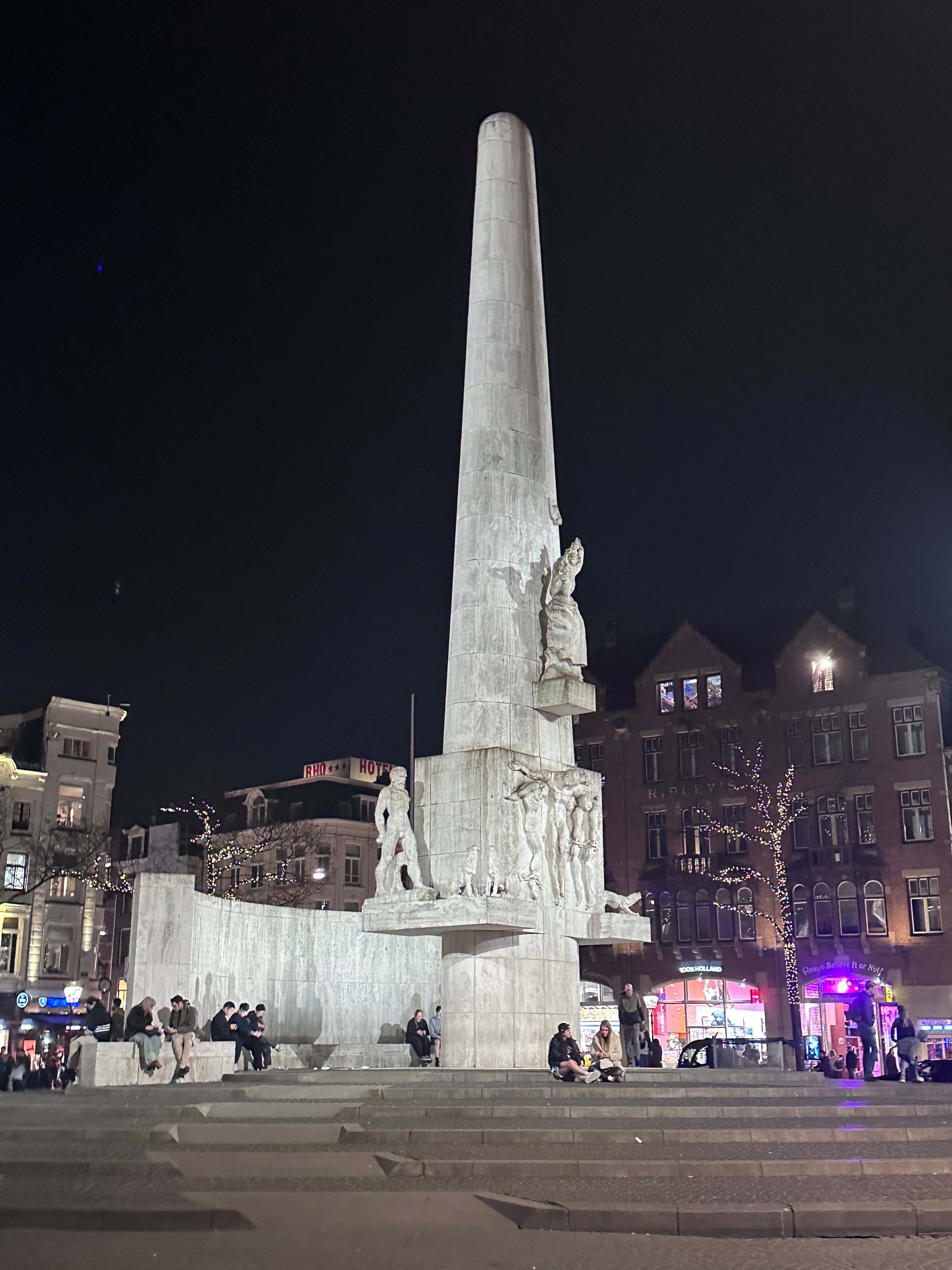
The giant white pillar in the center isn't just a photo op; it’s a memorial to those lost in WWII. Hidden inside the monument are 11 urns containing soil from the 11 Dutch provinces, plus a 12th urn with soil from Indonesia (a former Dutch colony)🌍🏺 In the 1960s, this was the "it" spot for world-famous hippies to hang out and sleep—the city actually had to ban sleeping on the steps because it became so popular! ✌️🎸
The Royal Palace: A City Hall in Disguise 👑🏛️
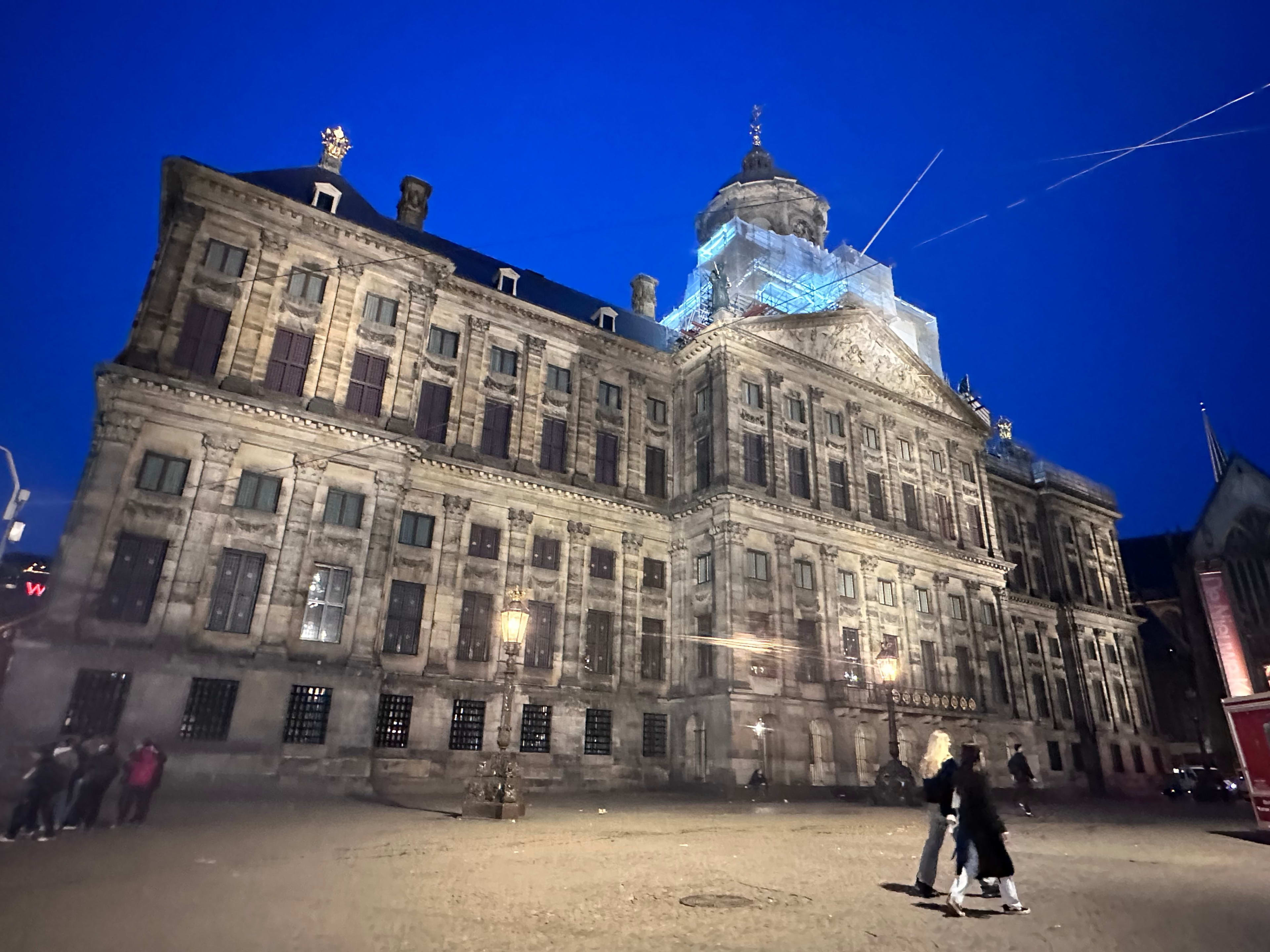
This massive stone building is now a palace, but it was originally built to be the City Hall. When it was built in the 1600s, it was so grand that people called it the "Eighth Wonder of the World." Just like the train station, it’s held up by a forest of trees—specifically 13,659 wooden piles. The Dutch really were the masters of building on "nothing." 🪵🏗️
De Nieuwe Kerk: The "New" 600-Year-Old Church ⛪🕯️
Right next to the Palace is the "New Church" (which is actually from the 1400s). You might notice it doesn't have a bell tower. That’s because the Palace (the old City Hall) was meant to be the most important building in the square, and a tall church tower would have "outshined" the government. 🔔🚫 This is where Dutch Kings and Queens are officially inaugurated. 👑
The Walk Toward the Neon: Heading to De Wallen 🏮🚶♀️
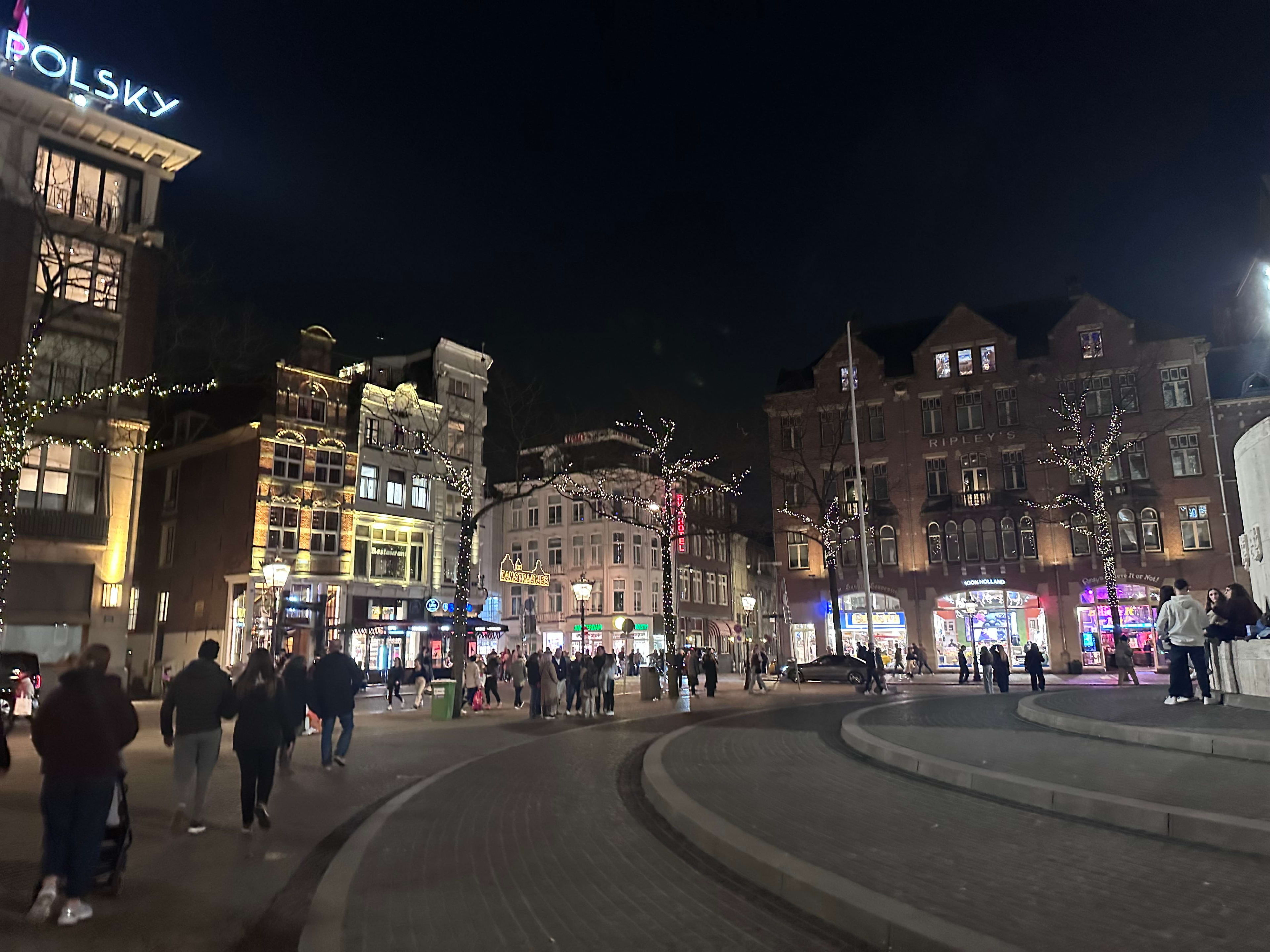
As you leave the grand, open space of Dam Square and head down the narrow side streets (like Damstraat), the atmosphere changes instantly. The streets get tighter, the buildings lean further over the canals, and the air starts to smell like a mix of waffles and... well, Amsterdam. 🧇💨
We wanted to understand the why behind the neon, so we booked the Viator walking tour, and it was exactly what we were looking for. It’s one thing to see the lights, but it’s another thing entirely to have a guide point out the tiny, historic details you’d normally walk right past.
Entering the Wallen (Red Light District) 🔴🕵️♂️ From the "Royal" Dam Square to the "Gritty" Red Light District is only about a 5-minute walk, but it feels like crossing into a different era. As you cross into the district toward the Oude Kerk, you’ll walk over some of the oldest bridges in the city. Look for the "Bloedbrug" (Blood Bridge). Legend says it’s named after the blood of executed prisoners that supposedly flowed down the canal, but it was likely just named after a local guild! 🩸🌉Right in front of the Oude Kerk, look for a small bronze statue of a woman standing in a doorway called "Belle." It’s the world’s only monument to sex workers, and the inscription reads: "Respect sex workers all over the world." It’s a powerful reminder of the humans behind the famous windows. 💃🗽Stand on the bridge facing the Oude Kerk at twilight. You’ll see the 700-year-old church spire reflected in the canal, framed perfectly by the red neon lights. It’s the ultimate "Amsterdam Contrast"—where the sacred and the profane have lived side-by-side for centuries. ⛪🏮✨
The Red Light District (or De Wallen) is easily the most famous—and most misunderstood—neighborhood in the world. While most tourists visit for the neon and the nightlife, the real story of this place is a 700-year-old tale of survival, sea trade, and some very strict Dutch rules. We took the Viator tour to learn more - it was absoulutly worth it.
How it All Started: Sailors and Saints ⚓⛪
The district was established in the 1300s for a very practical reason: the port. Back then, Amsterdam was a global shipping hub. Thousands of sailors would arrive at the nearby docks after months at sea with pockets full of gold and a desire for "entertainment." The city realized it couldn't stop the trade, so it decided to contain it. By keeping it right next to the port (and the Oude Kerk!), the city could tax it, monitor it, and keep the rest of the residential areas "respectable." It’s been a designated "tolerance zone" almost since the day the first brick was laid.
Most people think there is only one Red Light District, but Amsterdam actually has three.
De Wallen: The famous one in the old center.
Singelgebied: Located along the Singel canal. It’s smaller, a bit quieter, and popular with locals who want to avoid the "Damrak crowds."
Ruysdaelkade: Found in the De Pijp neighborhood. This one is very different—there are no tourists, no neon "tours," and it’s tucked away in a residential street. It’s much more discreet and professional.
If you look at the buildings in De Wallen, you’ll notice two very specific, very narrow houses that locals call the "Two Old Sisters." * They are two of the oldest remaining wooden-front houses in the city.
Our guide shared the legendary story of the Fokkens sisters, Louise and Martine. These identical twins worked in the windows here for over 50 years! They even have a famous documentary, Meet the Fokkens. Hearing how they saw the district evolve from a gritty sailor’s port into a global landmark made the whole area feel so much more human and less like a "tourist attraction."
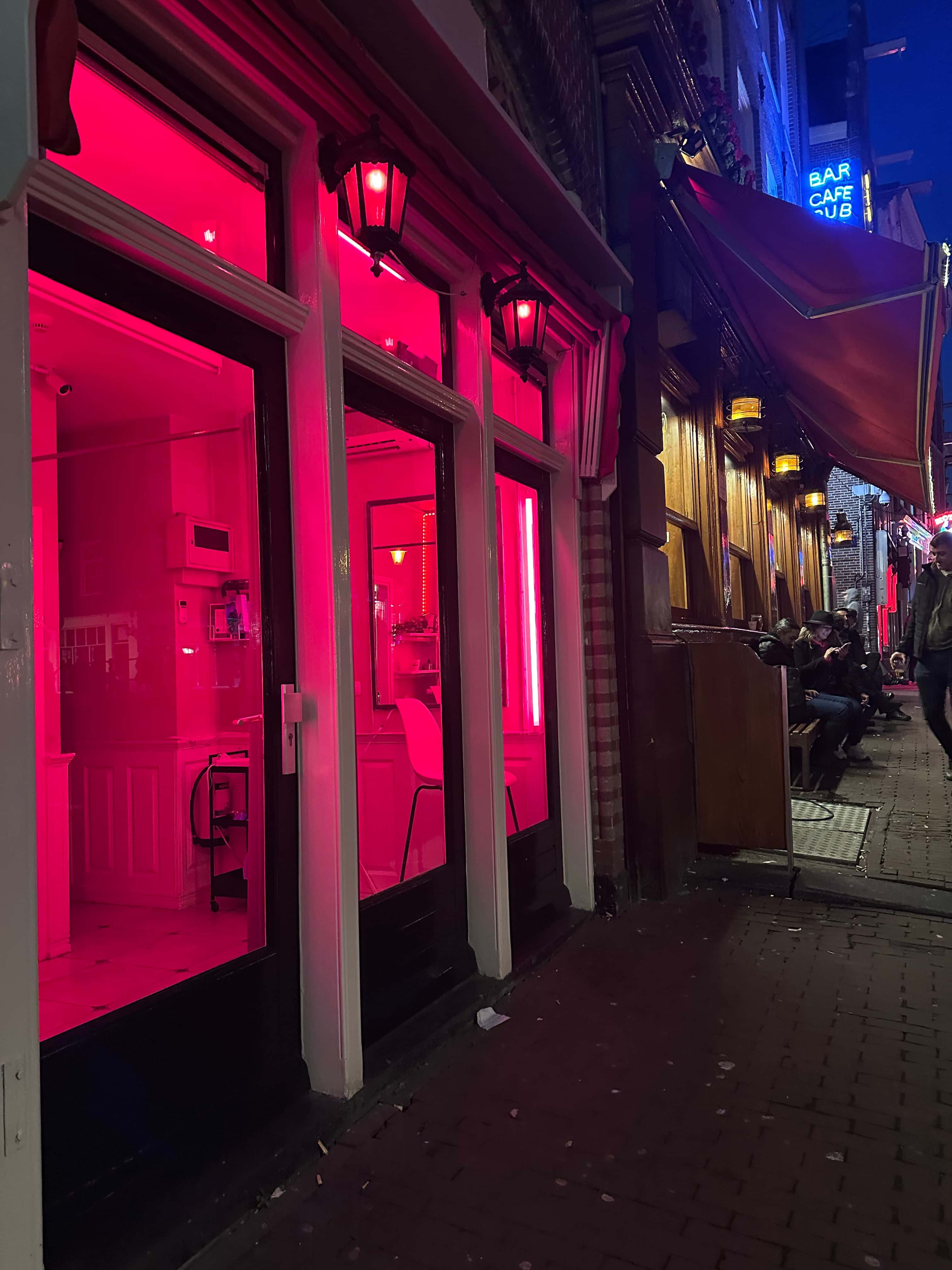
One of the biggest "unknowns" for tourists is how regulated the work actually is. This is not a "lawless" area; in fact, it’s one of the most bureaucratic places in the city. Every worker is an independent entrepreneur. They must register with the Dutch Chamber of Commerce. Workers don’t just show up; they rent their windows. They sign a formal contract for an 8-to-12-hour shift. The "contract" also involves mandatory safety standards. Every room has a "panic button," and the police and health officials are in and out of these buildings constantly to ensure no one is being exploited.
Hidden Secrets of the District 🕵️♀️✨
The Blue Lights: 🔵 Look closely at the lights above the doors. While most are red, blue lights indicate a different specialty. It’s a subtle code that most tourists walk right past without noticing.
The "Invisible" Church: Tucked inside one of the canal houses in the district is Ons' Lieve Heer op Solder (Our Lord in the Attic). It’s a secret, beautiful Catholic church built inside a regular house because Catholicism was banned in the 1600s. You’d never know it’s there from the street!
The Bronze "Hand": Look down at the cobblestones near the Oude Kerk. You’ll find a bronze relief of a hand caressing a breast. It was placed there anonymously in the middle of the night in 1993. No one knows for sure who put it there, but it has become a symbol of the neighborhood’s identity. 🖐️✨
The "Trompettersteeg": This is the narrowest alley in the city (only about 100cm wide). Walking through leads you straight into the heart of the "windows."
The Big Takeaway: When you walk through De Wallen, remember that you are walking through a highly organized, historic business district. The Dutch approach is simple: “If you can’t make it go away, make it safe and tax it.” It’s the ultimate example of Dutch pragmatism! 🇳🇱💪
While the "Erotic Center" is being debated, a more subtle change is already happening on the streets. The city of Amsterdam has been aggressively buying up buildings in the Wallen. When a "window" business goes up for sale, the city often buys the building to prevent another window from opening. Instead of more bars or souvenir shops, the city and private developers are intentionally renting these historic buildings to teachers, police officers, and artists. 👩🏫🎨 The goal is "social diversification." By bringing in residents who actually live and work in the community, the city is trying to turn the neighborhood back into a neighborhood. They want the streets to have local grocery stores and quiet evenings rather than just "tourist-only" businesses.
Amsterdam is currently in the middle of a "tug-of-war" between its gritty history and its future as a modern, livable city. For the first time in 700 years, the city is trying to move the "windows" out of the historic center. The Mayor has proposed building a massive, high-tech "Erotic Center"—essentially a vertical Red Light District. It would be a secure, multi-story tower with windows, bars, and health services all under one roof. One of the top proposed locations is near Schiphol Airport. The goal is to move the "party tourism" away from the fragile, 17th-century canals and into a controlled environment where safety and noise can be managed better. Not everyone is happy. The workers feel safer in the open, crowded streets of the center, and the suburban residents near the airport aren't exactly thrilled about a "Red Tower" moving into their backyard.
1 / 7